
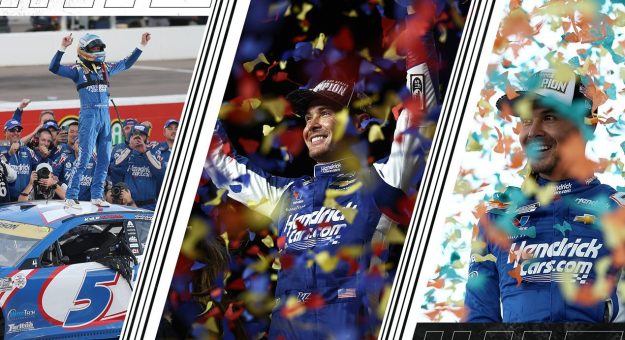
It was, to borrow Kyle Larson‘s words, “a little anticlimactic,” sure.
But most dominant results are.
Despite the hopes of Christopher Bell and Denny Hamlin entering Homestead-Miami Speedway on Sunday, a seven-point showing by Larson in the opening stage — combined with eight and five points by Bell and Hamlin, respectively — meant it was mathematically impossible to catch Larson in the Chase presented by Mobil 1 standings by the end of the day. Just like that, Larson was your 2026 NASCAR Cup Series champion.
RELATED: Watch NASCAR video highlights
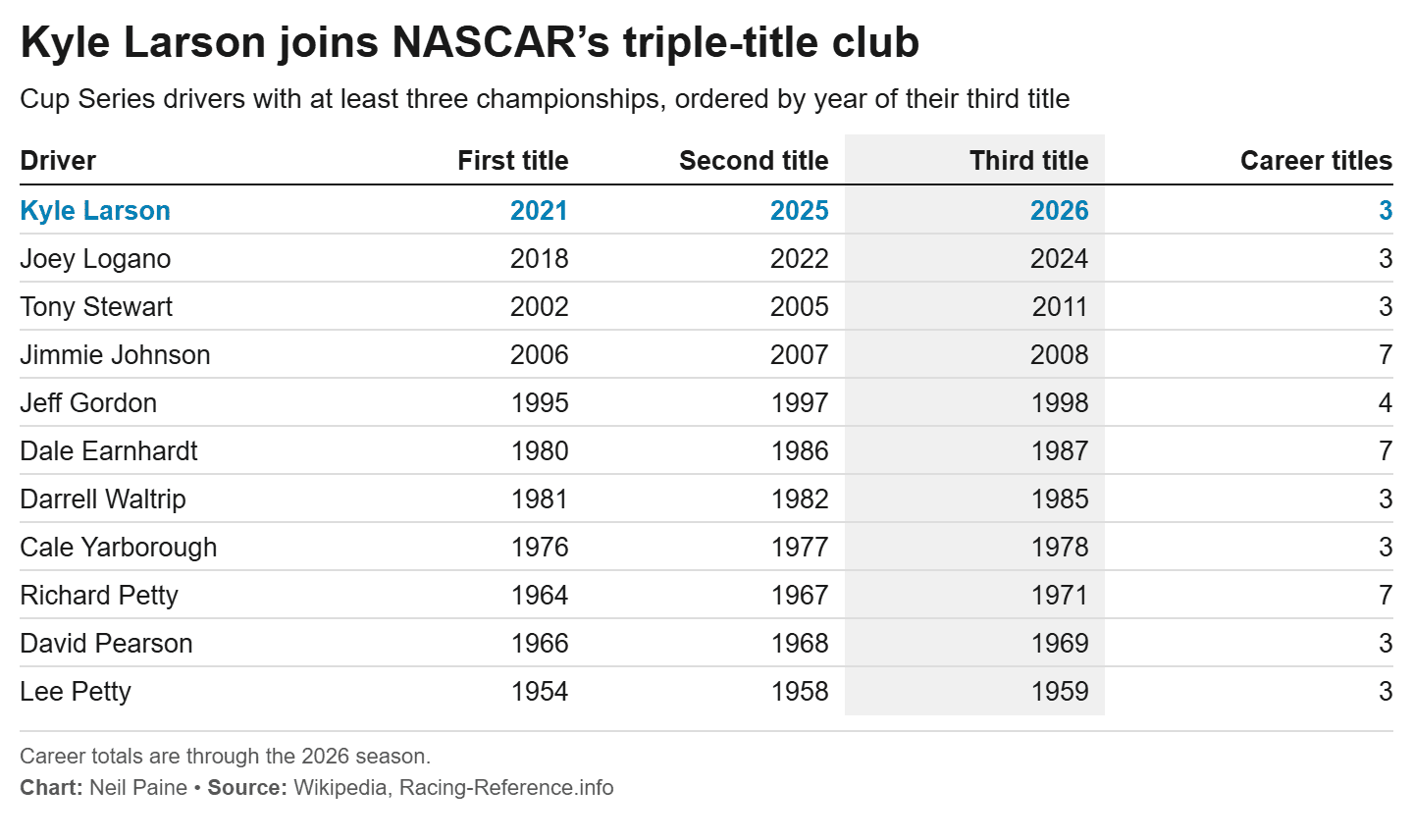
And with it came all kinds of NASCAR history. Larson is now one of just 11 drivers in Cup Series history to hoist the Bill France Cup three times, and he‘s the first to do it in back-to-back seasons since the last two of Jimmie Johnson‘s five straight, in 2009-2010. Larson, Johnson, Joey Logano and Tony Stewart are the only drivers to join the triple-title club this century:
 The fascinating thing about Larson, though, is that — out of the three title runs — he hasn‘t ever had the same championship season twice.
In 2021, Larson had the best team and he rolled to the title. He won five races during the regular season — including three in a row (four if you count the All-Star Race) at midseason — and entered the playoffs as the No. 1 seed, then rattled off five more victories in the next 10 races, winning the elimination race in three out of four rounds. It was, statistically, one of the most dominant seasons of the 21st century. Given a second chance and a shot at redemption by Hendrick Motorsports, Larson kept his eye on the prize all season and he didn‘t miss.
Last season was different: Larson started the year with wins in three of the first 12 races, prompting us to investigate where his peak ranked among all-time drivers. But he seldom found that peak form over the rest of the regular season, averaging a finish of 17.4 with an 80.2 Driver Rating from mid-May onward. It was only in the playoffs that Larson‘s performance ticked upward, though he still did enough to survive and advance rather than dominate — typified by how he ended up outdueling Denny Hamlin with a third-place finish in Phoenix. He joined Stewart in 2005 as the only champions to go winless during the postseason.
And then there was this season. In a strange inversion of both of his previous championship campaigns, Larson was both winless and not especially dominant during the regular season, ending up as the No. 7 seed going into the reborn Chase.
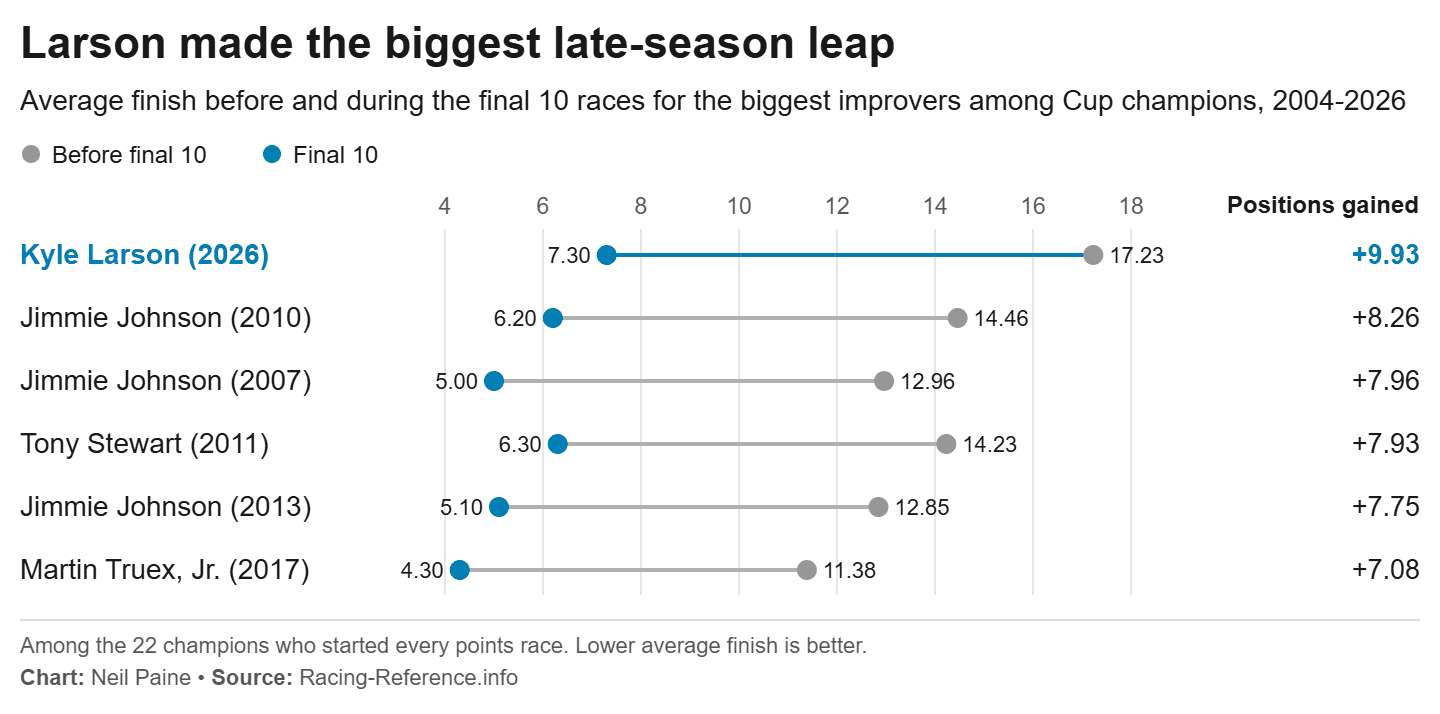
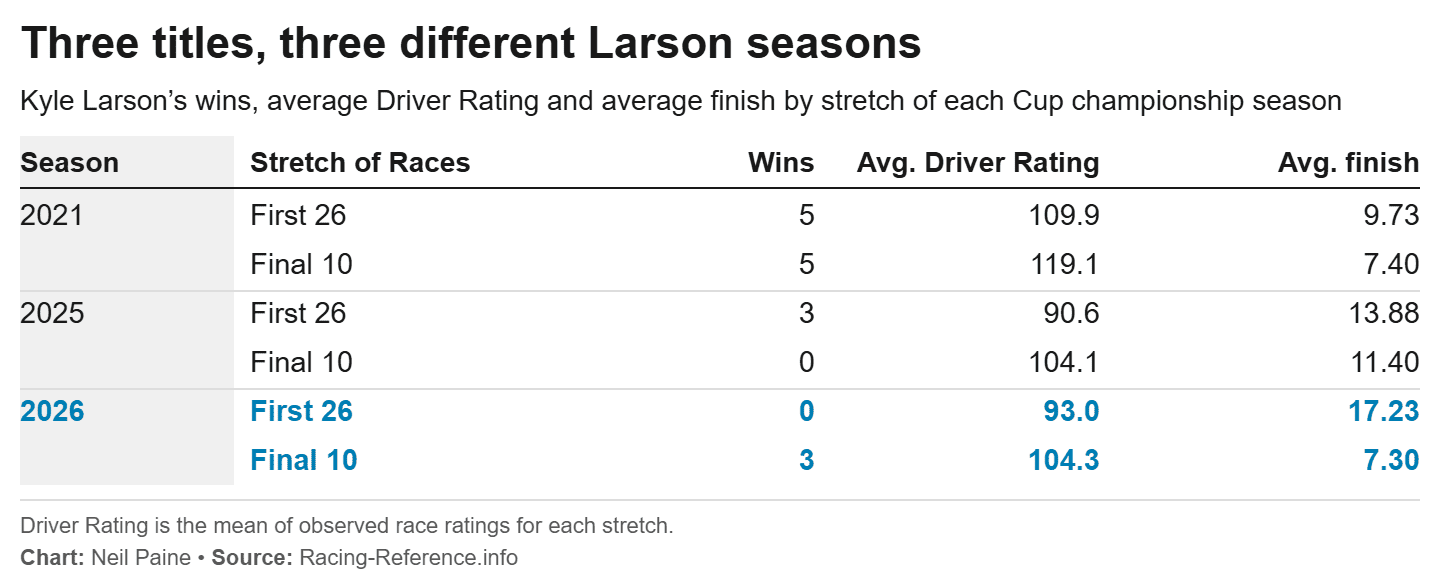 But, of course, that was before he turned everything around in The Chase. After posting a good-not-great 93.0 Driver Rating and a pretty pedestrian 17.2 average finish in the regular season, Larson then improved his rating by 11.3 points and his average finish by 9.9 positions in the final 10 races of the season — which happen to have been the most important races of the season as well. Among Cup champions during the “postseason” era of NASCAR (playoffs or Chase), nobody improved their average finish there more than Larson did versus the regular season this year:
 Now, this wasn‘t necessarily a full-on “Joey Logano in 2024” type of situation. (As I noted back then, Logano ended the season overall with the worst finishing quality and Driver Rating of any champion since at least 2014.) Larson posted significantly better values in both categories, especially after factoring in his Chase run. In the end, Larson‘s final numbers actually look like carbon copies of what he had a year ago — he just took a different route to them this time around:
- 2025 season: 3 wins, 15 top fives, 22 top 10s, 13.2 average finish, 94.3 Driver Rating
- 2026 season: 3 wins, 15 top fives, 21 top 10s, 14.5 average finish, 96.1 Driver Rating
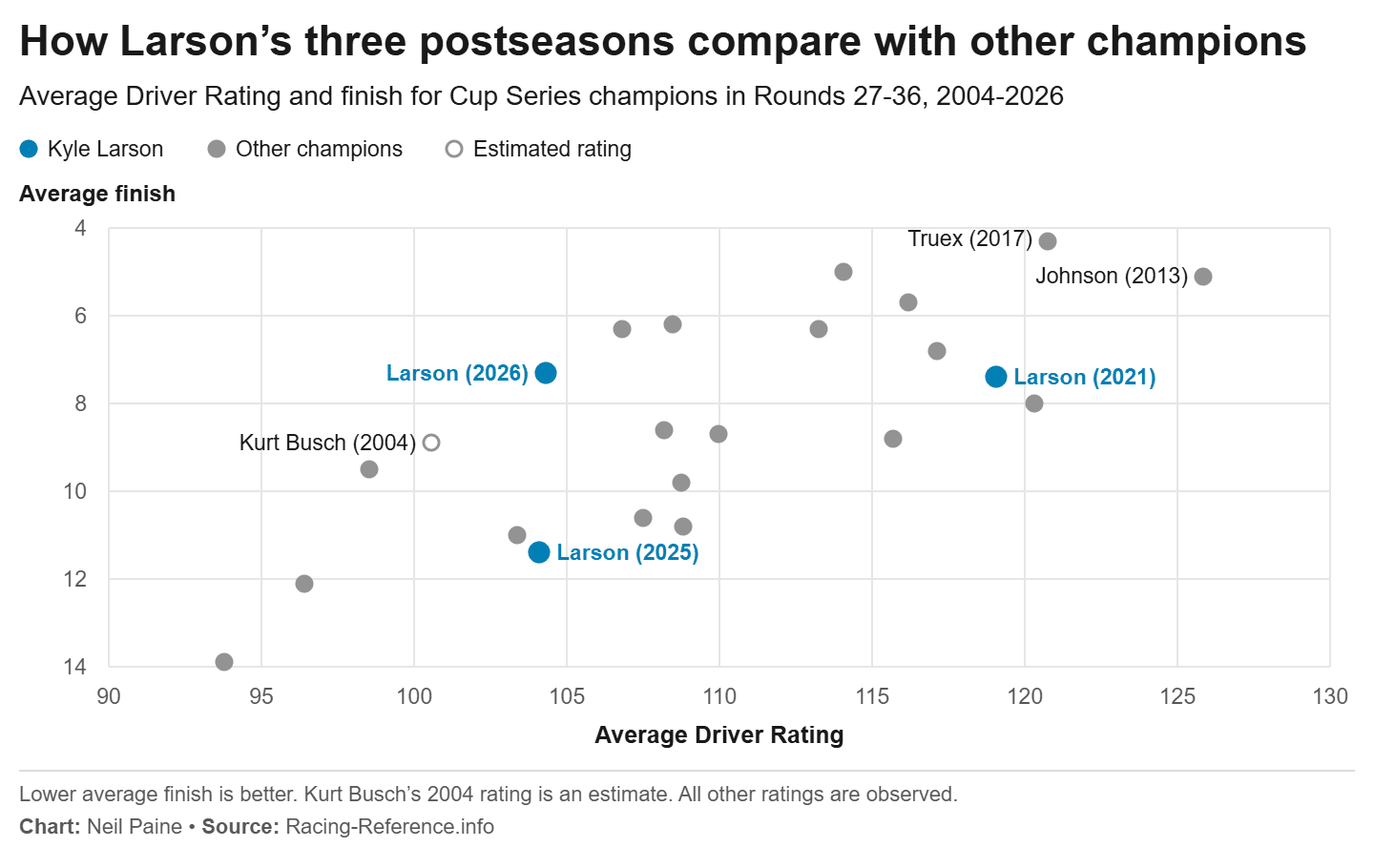
His postseason Driver Rating wasn‘t even very different — Larson just converted that potential into better finishes in 2026 than he did in last year‘s playoffs, ending up this season with one of the better average finishes of any champion (ninth out of 23 since 2004, better than either of his other title runs) during the span of the postseason itself.
 Now, the attention turns to where Larson might go from here.
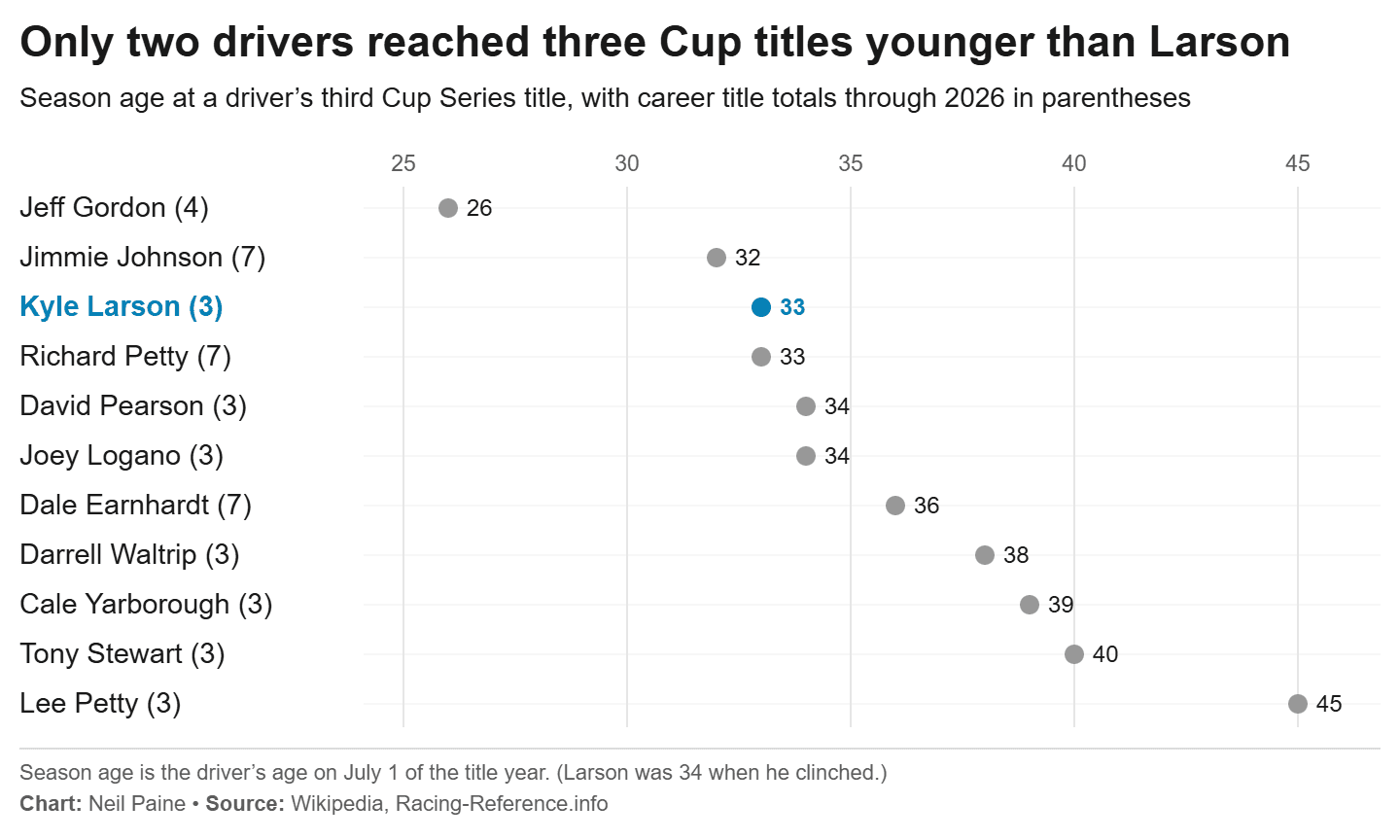
Using the “season ages” at Racing-Reference.info — which aim to place all drivers on equal footing in age comparisons by looking at their ages on July 1 of a given season — 2026 was Larson‘s age-33 season. (He turned 34 later in the summer.) With three career Cup Series titles through that age, Larson joined a very elite club whose only other members — Jeff Gordon (who did it by age 26), Jimmie Johnson (age 32) and Richard Petty (like Larson, age 33) — went on to win more titles, in some cases many more:
 And we know from our past research that Larson likely has a lot of winning left to do. Among retired drivers who won at least 10 races in the modern era (since 1972), more than half of their career wins came from their age-34 seasons onward, on average. In other words, Larson — with his 35 lifetime wins and three championships, might not even be halfway to the resume he ends his career with.
That‘s kind of a scary thought, given how much Larson has already accomplished in the sport. After all, we‘ve now seen him win championships by dominating from start to finish, by doing just enough to survive, and by saving his best racing for when it mattered the most. If there‘s one thing that trio of title runs has taught us, it‘s that Larson doesn‘t need a particular formula to win NASCAR‘s biggest prize. So at this point, the biggest question might not be whether Larson can win another one, but what new route he‘ll come up with to get there.