NASCAR and the United States military go hand in hand. But never before have they worked hand in hand like this.
A groundbreaking project will finally be brought to life this weekend as NASCAR takes over Naval Base Coronado across the bay from San Diego, the product of over two years of planning and creating that brings the top levels of American stock car racing to the streets, tarmacs and runways of an active United States military base for the first time.
MORE: Schedule: Naval Base Coronado | See the track come to life
Such an effort requires unprecedented coordination and cooperation between NASCAR’s design team and the U.S. Navy. That, in part, helped make Amy Lupo a natural fit for president of the NASCAR San Diego project. Lupo spent decades creating intricate, technical sporting events out of nothing, with a history at X Games, before shifting to NASCAR to help lead its first modern-day temporary course at the Los Angeles Memorial Coliseum.
“Temporary events is my entire career,” Lupo told NASCAR.com.
And four years removed from the inaugural Clash at the Coliseum, she has helped lead perhaps NASCAR’s most ambitious project yet: racing on an active naval base.
“It’s the lessons that I’ve learned for 30 years: Expect the unexpected,” Lupo said. “Plan, plan, and overplan, and be ready to pivot it at a moment’s notice.”
That has been the course of action for NASCAR’s Design & Development team, led by operations director Brian Geye, senior director Jeremy Casperson and managing director of track development Jerry Kaproth. NASCAR has worked closely with the United States Navy to achieve a monumental feat, beginning the process in secrecy and evolving it all into one of the sport’s landmark events.
“We’ve been working with them for over two years, just understanding exactly what we can and can’t do,” Casperson told NASCAR.com in a June 12 teleconference, “and then using that information to build out how we were going to pull off what we’re going to pull off here. So that’s been a lot of back and forth over the last two years. One of the difficult things is we speak a language, NASCAR does, and the Navy — rightly so — speaks their own language. And trying to learn their language and exactly how it translates to our language and vice versa, it’s been a learning process, and I think we’ve made really good strides, and we feel like we’re in a great spot.”
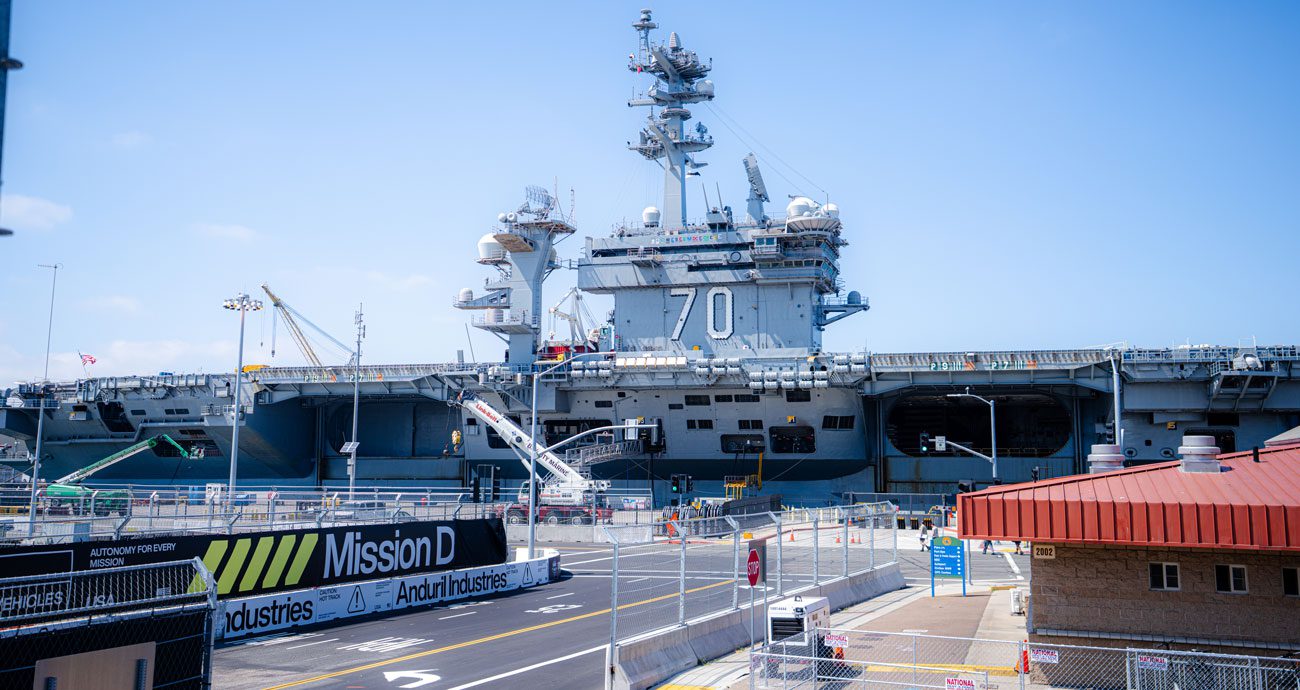
The 3.4-mile, first-of-its-kind course runs through the heavily worn streets of the naval base before weaving onto runways used by jets, and pit road set where there are typically anchor points for helicopters to park. The airfield remained optional until Wednesday, Casperson said.
“We’re going to turn out onto a portion of the airfield that we worked long and hard on to try to make sure those squadrons were accommodated before we showed up,” Casperson said. “And we’ve got grandstands in front of hangars and flight lines are cleared. It’s been, dare I say, smooth from that perspective, just for all of the communications that we’ve had with each other.”
Geye spent 28 years at the former Auto Club Speedway in Fontana, California, before assisting with more temporary venues like The Clash, the Chicago Street Race and now Naval Base Coronado. Working through naval restrictions has been a new challenge, but one made easier by the desire on both sides to collaborate.
“We had to put together a timeline of where we were going to be, where on base, and get that blessed by the Navy,” Geye said. “Part of the course runs on base roadways, which you would think would be harder to manage. They’re actually easier to manage because the other flip side is we’re on the airfield and they’re still flying. I mean, I could have a jet fly by today, and we’re in the middle of this interview. And so the real mission is America’s military here, first and foremost.
“And so coordinating with the squadrons here, not only from helicopters on the airfield, the jets that are flying around here, coordinating all that stuff has been critical. And we just slowly migrate our way around. And who needs to fly the longest? And what’s the last point? And at some point, we have to start the build. We can’t whip it up the night before. So working through that piece with everybody has had to be pretty strategic, and thankfully I think it’s all coming together.”
MORE: Van Gisbergen among best at new venues | Watch NASCAR video highlights
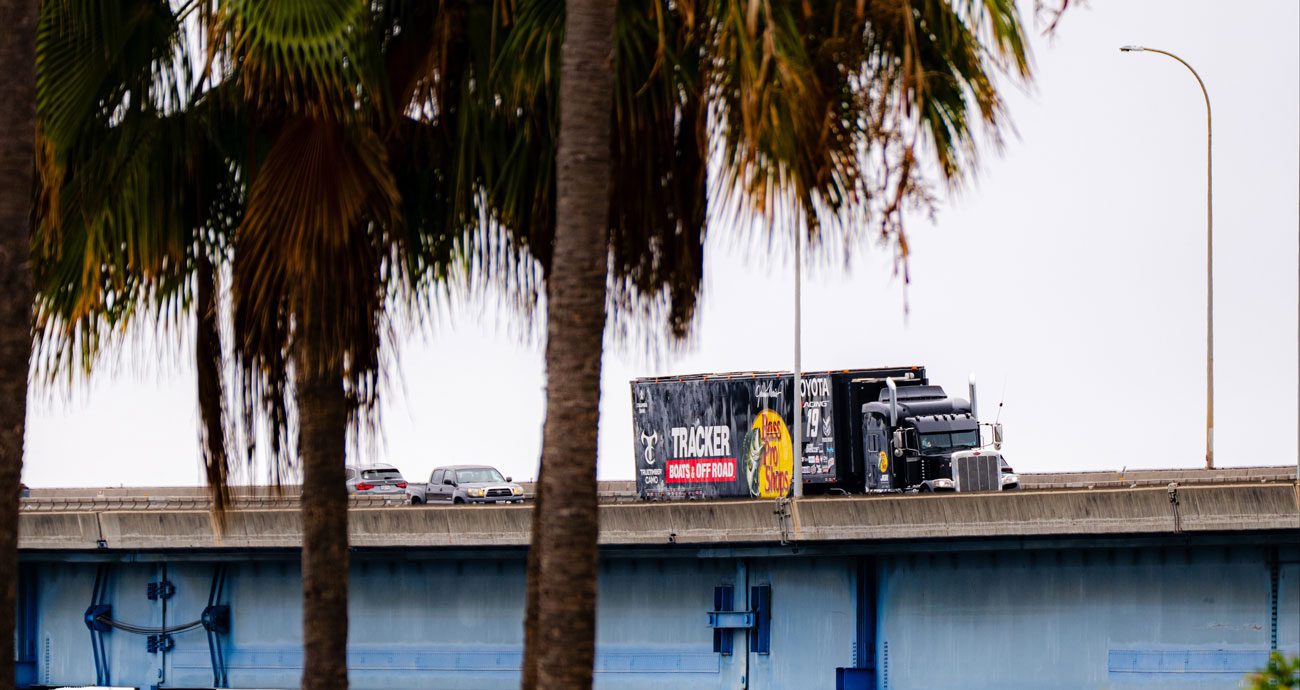
Casperson said NASCAR truly moved in on May 25, loading in the first few trailers and beginning work on the hospitality structure at the start/finish as well as grandstands, all of which were the focus of Week 1, roughly one month out from race week. Track walls were first laid on June 1, with work on track layout running through Wednesday, June 17, two days before on-track action is slated to begin. With barriers and fencing on either side of the course, that equates to 6.8 miles of wall and fence, Casperson added, with 3,184 barriers all installed by Wednesday night.
The work has been unrelenting, with 17 straight days of work to ensure all is completed in time for beautification around the course on its final touches. And while the focus of these processes has centered around NASCAR and the Navy, outside assistance has been critical. That includes partnering with Formula One’s Las Vegas Grand Prix on barriers and fencing, Lupo said, with 25 trucks a day working around the clock to ensure timelines are met.
The final course layout is similar to what was originally presented to a small group of drivers who offered feedback and reaction to the course that helped lead to any necessary changes along the way. Much like past iterations of temporary race tracks, iRacing played a pivotal role as its team created a LiDAR (light detection and ranging) scan to create as true-to-life renders of the track as possible.
“We utilized drivers who would come to the R&D center on the iRacing format program,” Kaproth said Tuesday. “We had multiple drivers come in who would give us some suggestions relative to tweaks of the course, and we actually had a couple different versions of that. So as we landed on the configuration, then we’d go back to the drivers and meet with them regarding some of the competitive locations.”
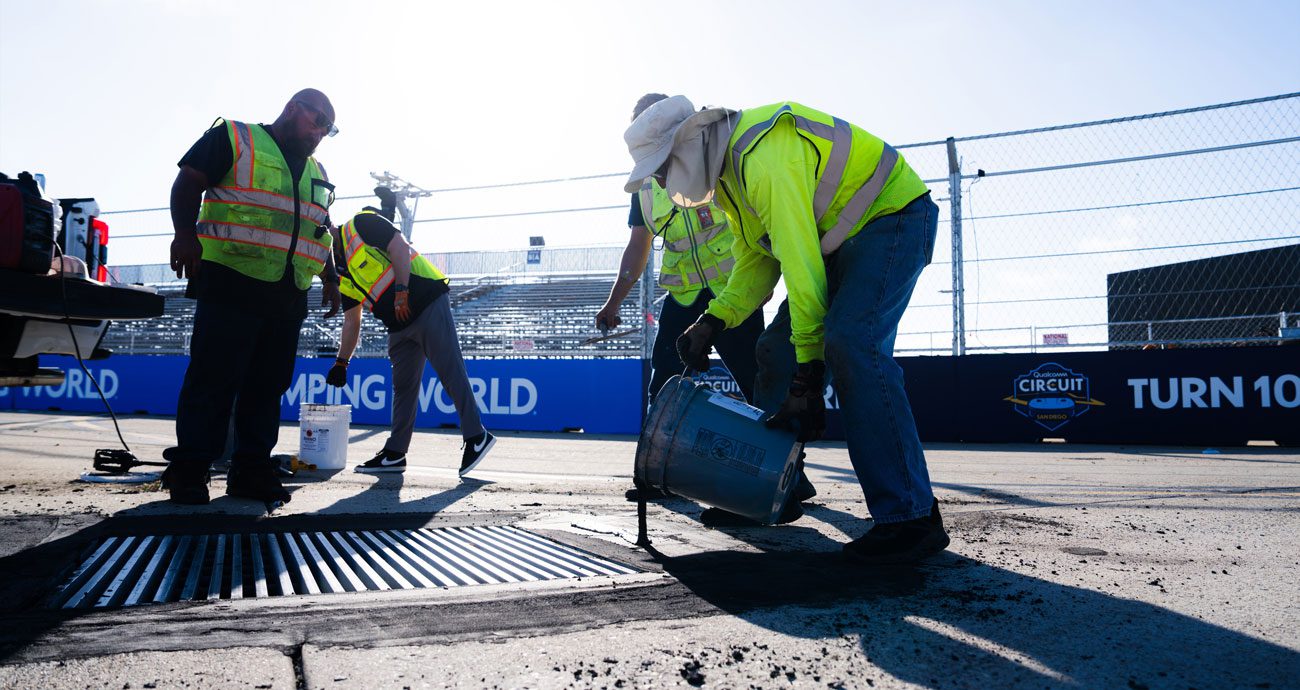
The abrasive surfaces around the base necessitated roughly $1 million worth of work on the surfaces alone. That includes a portion of the track in Turn 4 which runs over a section of railroad tracks used for cranes on base in addition to over 150 sites that needed welding.
“Valves, manhole covers, electrical boxes, or some compressed air boxes, all sorts of stuff that come with a military base,” Casperson said. “We didn’t really remove anything, but we added some pavement for the chicane, and we added some pavement in the Turn 4 area. We had some real big undulation down by the crane rails. We smoothed it out really the best we could. It’s not smooth, but it’s a heck of a lot better than it was.”
RELATED: 23XI Racing jackman blends racing, military worlds
The coordination necessary to pull this operation together is perhaps obvious, but there is a stronger through line to the Navy’s partnership with NASCAR than anticipated. A number of naval sailors have volunteered their own time to physically help build the course of their own volition, aiding and accelerating the process as best they can.
“We’ve got five CVs in my sight from ACB1 — Amphibious Construction Battalion One — and they’re out here working with our contractor-set wall,” Casperson said. “I’ve got probably six of them over working on the pedestrian bridges. We’ve got a couple other ones that are doing welding and miscellaneous track work, working with a couple of the operations teams from Phoenix, so just a good storyline to be working with these guys. They’re good dudes, great Americans. Glad to be working alongside them and letting them get some gratification of having a part in this monumental event for the Navy and for us.
“These guys want to be here. This is not like they’re being asked to be here. They want to be here. Any input from these guys is mostly voluntary. They were allowed to make that choice. If they wanted to go work, be a part of this, they’re eligible to come out, and that’s where almost all of them are coming from. There’s no one out here that doesn’t want to be out here from the Navy, and I think that’s great for us, and they see it as training opportunity for real-world application, so it’s awesome.”
The cooperation was carried out under the agreement and understanding that the base would otherwise remain “fully operational.”
“A lot of planning has prevented a lot of stress between the two of us, so we feel pretty good about it,” Casperson said. “But it’s still a challenge at the end of the day when we’re trying to pull off our mission, and we’re trying to make sure that we allow them to continue to operate fully as we can because this is their livelihood, right? This is the U.S. Navy. They’ve got to be ready to go at a stroke of a pen, so I think we’re doing so, but at the same point in time, it still is a challenge because time’s ticking.”