
The ejection of crew chief Rudy Fugle at Daytona International Speedway occurred during NASCAR‘s ongoing effort to reduce the rate of prerace inspection failures.
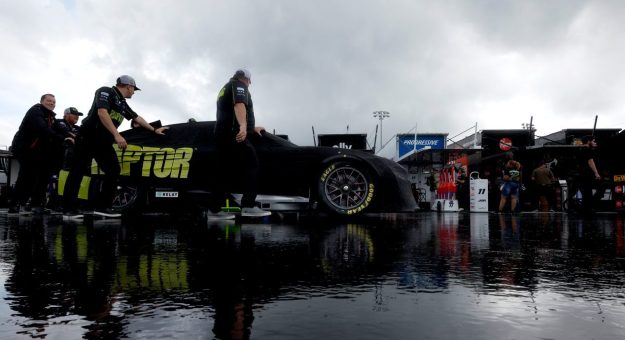
During the latest episode of the “Hauler Talk” podcast, NASCAR managing director of communications Mike Forde said a team member was spotted pushing down the splitter of William Byron‘s No. 24 Chevrolet after the car passed prerace inspection. The underbody was re-examined after the unapproved adjustment, and the car‘s subsequent failure resulted in Fugle‘s ejection from the track.
“We want fans to understand that every car here has been closely scrutinized and is on an even playing field,” Forde said. “So, when you make an adjustment with an official‘s back turned, that’s going to be a bigger penalty than just if you fail a body measurement. You very rarely hear of a crew chief getting ejected; probably 90% of the time, it is the car chief. So, when you see the crew chief ejected, that is why. When you do something after inspection’s clear, we ramp it up.”
Byron, who had clinched the regular-season championship before the finale at Daytona, also was hit with a loss of pit selection, starting from the rear and a stop-and-go penalty. Because it was applied entirely at the track (without a fine or points deduction), the penalty could not be appealed, but Forde said there was no pushback from Hendrick Motorsports.
“It was even the opposite,” Forde said, alluding to a discussion between NASCAR senior vice president of competition Elton Sawyer and Hendrick executives. “I think the Hendrick brass themselves were not thrilled with their team on this one because it does draw attention to the Regular Season Champion in a negative way.”
MORE: Watch NASCAR video highlights
During a meeting with Cup teams in mid-July before the Dover Motor Speedway race, NASCAR announced a new policy in which a prerace inspection failure would relegate a team to the back of the inspection line for the next race. (Prerace inspection order is set through the points standings.)
Forde said NASCAR recorded a 55% failure rate for prerace inspections during the season‘s first 20 races. The goal of the policy change was to reduce the inspection failure rate to about 25% because the delays from the failures adversely affect the cadence of the weekend schedule. On race weekends with practice sessions, starting from the rear of the prerace inspection line makes it a larger scramble to prepare the car.
At Watkins Glen International, 38 of 40 cars passed inspection on the first attempt, which Forde said was a Cup series record. The failure rate was about 50% at Daytona, which had no practice sessions.
Other topics covered by Forde and NASCAR senior director of racing communications Amanda Ellis during the 30th episode of “Hauler Talk,” which explores competition issues in NASCAR:
— Whether NASCAR would review its policy of crediting relief drivers with a victory after Connor Zilisch turned his No. 88 Chevrolet over to Parker Kligerman in an Xfinity Series win at Daytona.
— How car numbers are assigned by NASCAR.
— The efficacy of the new A-post flaps at Daytona and why they were painted orange.
Click on the embed above to listen or search for “Hauler Talk” wherever you download podcasts to hear it on your phone, tablet or mobile device.
Nate Ryan has written about NASCAR since 1996 while working at the San Bernardino Sun, Richmond Times-Dispatch, USA TODAY and for the past 10 years at NBC Sports Digital. He is a contributor to the “Hauler Talk” show on the NASCAR Podcast Network. He also has covered various other motorsports, including the IndyCar and IMSA series.