
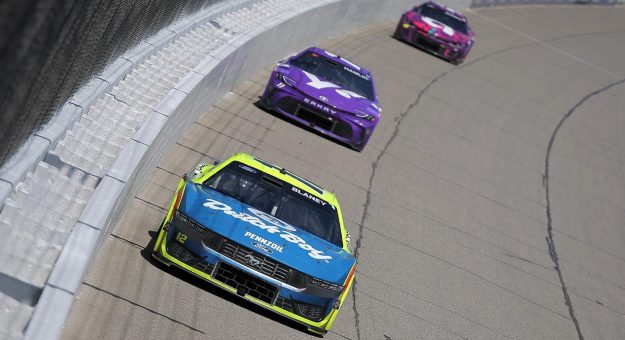
Every Cup Series track has its own special distinction — the attribute that separates it from every other stop on the schedule. Martinsville has its paperclip turns; Bristol, its bump-and-run battles. Daytona and Talladega (and now Atlanta) are all about the draft. And at Michigan International Speedway, they worship at the altar of speed — pure, blistering, full-throttle speed.
RELATED: Michigan schedule | Cup Series standings
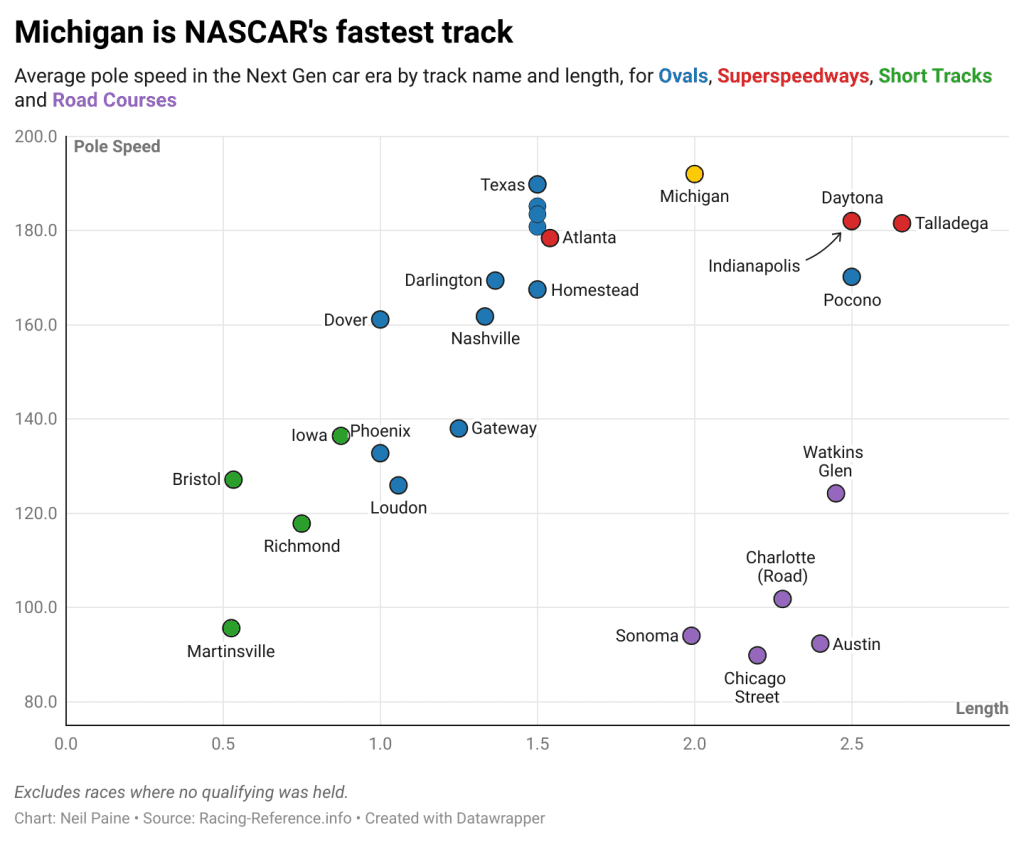
Exactly how fast do things get at Michigan? In the Next Gen era, the average pole-winning lap has seen a speed of 192.04 miles per hour, easily the fastest of any track on the 2025 schedule — beating out Texas (189.84 mph), Las Vegas (185.19), Charlotte (183.50) and Daytona (182.09):
And even that is a bit slower than it used to be. The typical Michigan pole in the Gen-6 era (2013-2021) was 200.5 mph, which rivaled the fastest qualifying laps ever put down at any NASCAR track. For comparison‘s sake, the average Talladega pole in the Gen-3 era — run mostly before restrictor plates became mandatory at superspeedways following Bobby Allison‘s harrowing catchfence crash at the 1987 Winston 500 — was only slightly faster, at 200.8 mph.
MORE: Watch NASCAR video highlights
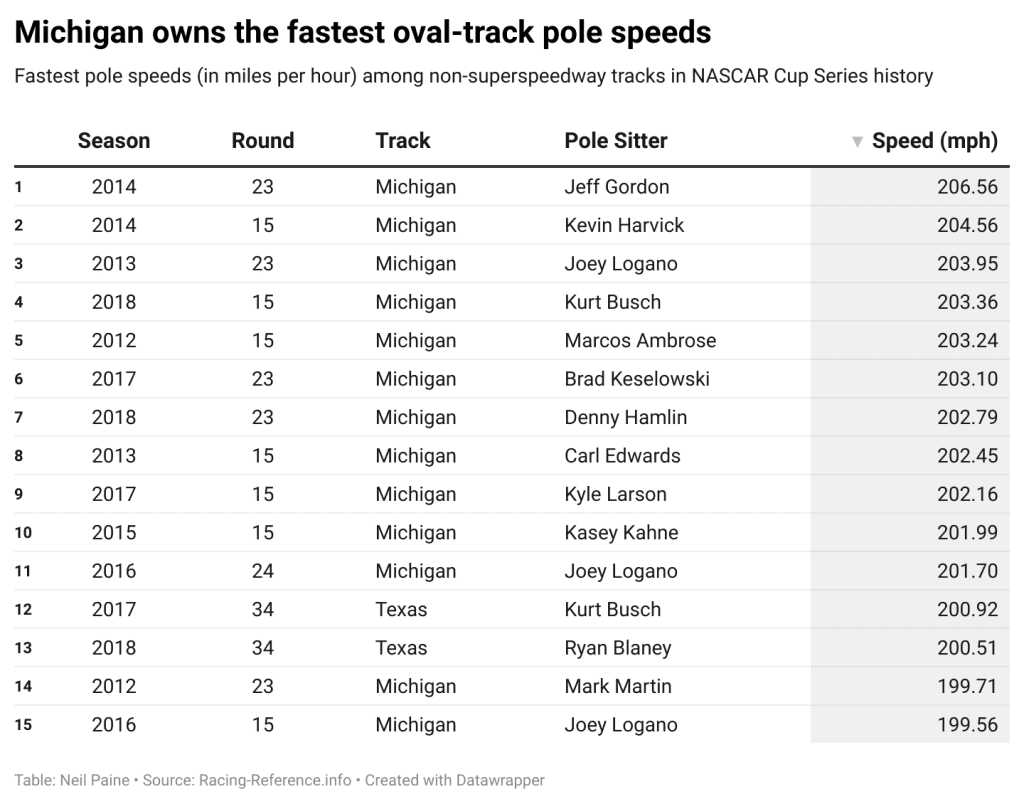
While the fastest pole speed in Cup history came for that very race (212.81 mph by Bill Elliott), and Daytona and Talladega make up each of the top six fastest pole-winning laps ever, Michigan is home to 13 of history‘s 15 fastest non-superspeedway pole speeds — and 11 of the 13 to ever break 200 mph:
Michigan‘s combination of long straightaways — it‘s a 2-mile track — with low tire wear and sweeping 18-degree turns creates ideal conditions for cars to build and sustain speed, especially on corner exit. Among ovals on the schedule, only Pocono and Indianapolis are longer (at 2.5 miles apiece), and both feature significantly flatter corners than Michigan does. (Indy‘s turns are banked at 9 degrees, while Pocono‘s three corners are banked at 14, 8 and 6 degrees.)
The result is a speed factory all its own, even by the standards of a sport where going fast is kind of the whole point.
So, given Michigan‘s identity as a temple of top-end speed and engine power, it‘s only natural to ask: Who are the fastest drivers in the Cup Series this season? According to a combination of conventional stats and Racing Insights‘ new performance metrics, here‘s how the 2025 regulars stack up on both average qualifying position and pure speed:
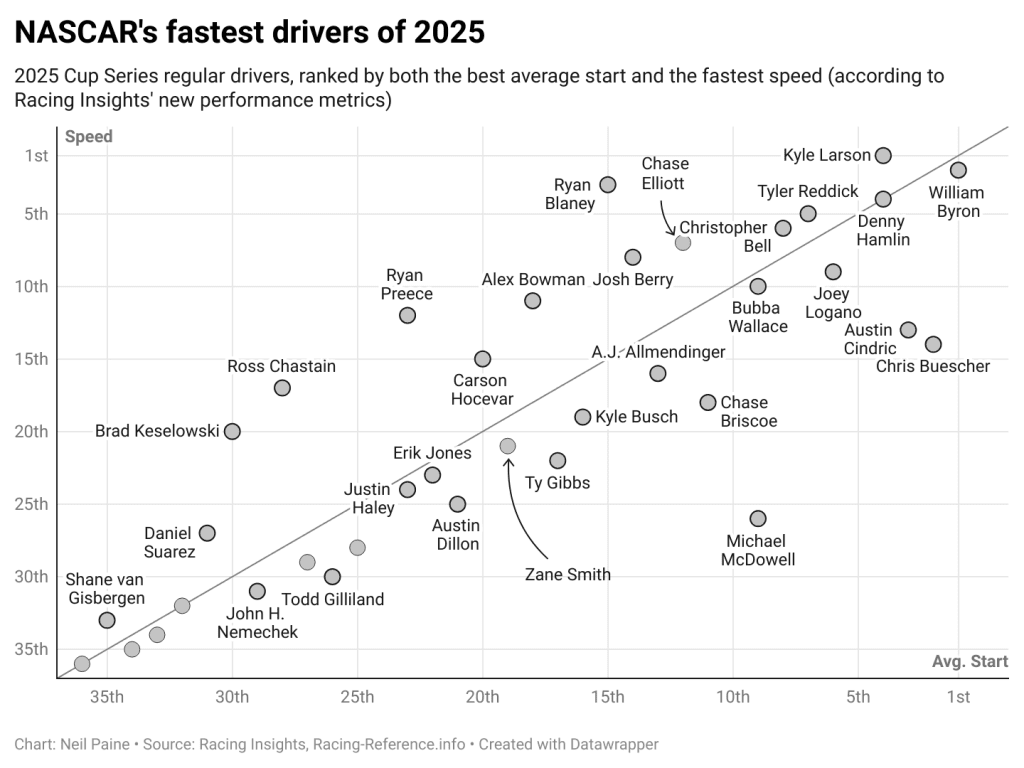
Of particular note is the NASCAR Insights speed stat, which measures a driver‘s pace throughout a race — factoring in short-run bursts of speed on new tires, long-run tire management (avoiding fall-off) and performance in both clean and dirty air. Kyle Larson has been the fastest by that accounting, which is no surprise considering that just last Sunday he battled from the back of the field after an early mishap to notch an eighth-place finish. Others who are faster than their grid position gives them credit for include Ryan Blaney (15th in average start but third in speed), Ross Chastain (17th/28th), Ryan Preece (12th/23rd) and Brad Keselowski (20th/30th).
But there‘s also nothing wrong with good, old-fashioned qualifying speed, either. And when it comes to laying down lap times in spite of his car‘s potential limitations, nobody has done more than Michael McDowell (26th in speed but ninth in average starting position), Chris Buescher (14th/2nd) and Austin Cindric (13th/3rd). With Fords at both ends of the spectrum — fast cars but also guys who qualify well in spite of slower overall speed — the Mustangs should be galloping at Michigan once again this year.
Because at Michigan, it really does always come back to speed: Who has it, who can hang onto it and who can harness it when it matters most.